Summary
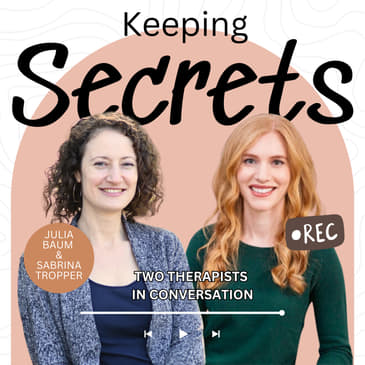
In this episode, Julia and Sabrina unpack the growing use and misuse of mental health buzzwords, with a particular focus on the term “trauma.” They explore how these terms have become diluted through overuse in everyday language and on social media, and why that matters. The conversation highlights the responsibility mental health professionals carry in using language carefully and how misinformation can blur the lines between genuine support and oversimplified solutions. With clarity, nuance, and a bit of critique, they invite listeners to reflect on how we talk about mental health and why precision matters.
Takeaways
Mental health buzzwords can dilute the meaning of serious terms.
The term 'trauma' is often misused in everyday conversation.
There is a lack of regulation in defining mental health terms.
Being trauma-informed does not equate to being a trauma specialist.
Misinformation can proliferate easily in the mental health field.
Therapists must navigate the colloquial use of mental health terms in sessions.
It's important for professionals to define their expertise clearly.
The overuse of terms can lead to confusion for clients seeking help.
Therapists should be cautious about correcting clients in sessions.
The conversation around mental health buzzwords is ongoing and evolving.
Chapters
00:00 Introduction and Technical Difficulties
01:20 Mental Health Buzzwords and Their Impact
04:16 The Intersection of Linguistics and Mental Health
07:19 Understanding Trauma: Definitions and Misuse
10:09 The Role of Social Media in Mental Health Terminology
13:13 Trauma-Informed vs. Trauma Specialist
16:09 The Overuse of the Term 'Trauma' and Its Consequences
19:09 The Need for Responsible Language in Mental Health
22:07 Conclusion and Future Considerations
23:34 Defining Mental Health Expertise
28:37 Navigating Terminology in Therapy
30:33 Understanding REBT and Its Impact
37:09 The Importance of Specialized Training
40:04 The Consequences of Misrepresentation in Therapy
46:55 Reflections on Mental Health Buzzwords
47:16 riverside_outro_
Episode Transcript:
Julia Baum (00:31)
Hey!
Sabrina (00:32)
Hey!
Julia Baum (00:34)
Hey, you got your new microphone?
Sabrina (00:36)
I do, I've got it today. Can you hear me okay on it?
Julia Baum (00:41)
Yeah, that sounds good.
Sabrina (00:43)
Good, good, good. good. Thank goodness. it was the old microphone that I got that was just not doing anything. But yeah.
Julia Baum (00:50)
Okay.
Sabrina (00:53)
How are you?
Julia Baum (00:54)
I'm all right. Yeah. I'm like slightly frazzled at the moment, but I'm just going to like zone in to our podcast. Everything's fine. It's just like life irritations. Nothing, nothing really. But
Sabrina (00:56)
Yeah, are you sure?
Is every okay.
Yeah. Okay.
Julia Baum (01:12)
yeah, how are you?
Sabrina (01:16)
good, thanks. I'm also a little frazzled too, but not in a bad way. And again, I think I had told you last time I kind of removed some things from my plate a little bit. I am so happy I did that. I don't know what I thought I was capable of, frankly. anyway.
Julia Baum (01:18)
Mm-hmm.
Mm-hmm. Mm-hmm.
Mm-hmm.
I feel
like when you have free time, it's kind of easy to fill it and then like overfill it or something.
Sabrina (01:46)
Yeah, and the truth is that I think I thought I had more time than I do because...
Julia Baum (01:52)
Mm-hmm.
Sabrina (01:54)
I just prioritized, I didn't think about what I was supposed to be prioritizing and didn't realize how much time. Anyway, you know, and that's a consistent issue that I've worked on or whatever, but yeah, you know.
Julia Baum (01:59)
Mm hmm.
Yeah, yeah, there's like,
also like kind of an energy cost, I think like you can only be like, energetic and like focused on so many things.
Sabrina (02:16)
Yeah.
think you're 100 % correct on that. I think it was more an energetic thing for me, I want to say. ⁓ And now I'm kind of realizing a little bit better. It just feels so much better, honestly, to have my plate a little bit cleaner. Yeah. Yeah. Thank you. It's a sign.
Julia Baum (02:24)
Yeah.
Hmm. Mm-hmm.
Good. Yeah, that's good. I mean, you do seem more calm.
Yeah.
Okay, so our episode today is about mental health buzzwords. And we've had some discussions about this and we've done some online exploring just to see like articles and Reddit threads and things that people
Sabrina (03:01)
Yep.
Julia Baum (03:16)
talking about, I don't know, everything from their gripes to using these words like they're real. I guess we're going to just go through some the ones that stood out to us and discuss.
Sabrina (03:29)
Yes, yeah.
Yes, we are.
Thank you, Julia, for starting us off. I'm gonna be honest, I didn't even fully realize that we were recording, so this is lovely. ⁓ But this is... ⁓ We might wanna cut that piece out or not, that said, that is exactly, that's what our plan was, and just to sort of be as off the cuff as we could today, and I think we're doing that. ⁓
Julia Baum (03:42)
Mm-hmm.
Uh-huh.
Sabrina (04:04)
But yeah, we spent a lot of time talking through this and I think had our own reservations and went through sort of a process of like, do we feel comfortable talking about this and all of that? But I have to say personally, I'm really happy that we are because it's something that's on my mind a lot. And ⁓ I think people, I hope people will be interested to hear it. And what do you think, Julia?
Julia Baum (04:14)
Mm-hmm.
Mm-hmm. ⁓
Mm-hmm.
Yeah, it's an interesting topic because it's sort of like an intersection between mental health practice or the work around mental health care and like linguistics and ⁓ like social norms and even how like
Sabrina (04:47)
Yeah.
Julia Baum (04:56)
algorithms sort of encourage certain ways of speaking. ⁓ I think that's where my hesitation came from because we've talked about, I think there is this linguistics component that I don't know anything about and I'm not comfortable with. ⁓ so I don't want to, I don't know, act like
Sabrina (05:02)
Yeah.
Yeah.
Yeah.
Julia Baum (05:25)
I know what I'm talking about in that vein, but we can just talk about how this impacts us as regular humans out in the world and as therapists practicing and working with clients.
Sabrina (05:29)
Well, like that. go ahead.
Yeah, and I love that you're kind of bringing that up because for a couple reasons, you I don't know a lot of people that would be as thoughtful in the sense of like, am I allowing myself to speak on a topic that I don't know much about? To be honest, I think more, there are more people than, and this is a generalization, but I think more often than not, especially when we think about online content, people are often speaking about stuff they know they're not experts on.
⁓ More, I want to say more often than not, especially with the mental health field. So for us being licensed therapists for a really long time, both of us have about just over a decade of experience, two decades between the two of us, right? I do think that we have enough expertise in that sense. Like this is our job. It's what we do day in and day out.
Julia Baum (06:13)
That is true.
Mm-hmm.
Sabrina (06:41)
and have been for the last decade ⁓ to actually speak on some of the mental health terms and things that are going around. From a linguistics perspective, I think you're right in that that's its own field and we can't pretend to be experts in that nor are we going to. We're not experts in linguistics, ⁓ but what people are seeing and being exposed to online
Also, none of that waits for the expertise to pop up and say, no, that's not actually accurate or not. You know what I mean? So from a mental health perspective, that's what we're going to be focusing on. At least that's what I feel comfortable doing. And I'm okay with that because we, myself, Julia included, we've both been adequately trained and I think we know enough. And some of the stuff that I don't know about, I'll just say, I don't know.
Julia Baum (07:16)
Mm-hmm, mm-hmm.
Mm-hmm.
Mm-hmm.
Sabrina (07:41)
You know?
Julia Baum (07:41)
Yeah.
It's fairly liberating to just say, I don't know when you don't know, rather than to kind of act like you do. ⁓ But yeah, no, it's interesting. I don't know why this is popping up. This is like an adjacent, sort of relevant to this topic. But ⁓ I think a lot of these buzzwords, people don't even know.
Sabrina (07:52)
Yeah.
Hahaha
Julia Baum (08:10)
Is this like a real term or is this like something that was made up on TikTok or something? And like what's coming to mind is ⁓ like sometimes I scroll through, do you know Harrow, like help a reporter out? Okay. They did and then they changed back. But like a year or two ago, I remember specifically there was like,
Sabrina (08:13)
Yeah.
Yeah, I think they might have changed recently, but yeah. I didn't know that. Okay.
Julia Baum (08:40)
this call out for therapists to respond to ⁓ like, what is bed rotting? And then they linked all of these TikTok videos about rotting. And they're like, is it healthy? How would it help someone cope or is it harmful? like all this stuff, like it's just like this made up thing.
Sabrina (08:55)
Gosh.
Yeah, it's not a clinical term, bed rotting. ⁓
Julia Baum (09:10)
⁓ No, but the way they ask,
it's I don't know. It's like asking about something that's real or something. And it's so strange. Yeah, or some sort of coping mechanism or something. ⁓ I don't know.
Sabrina (09:21)
Yeah, like a diagnosis. Almost, yeah.
Yeah, no, I think that's a really excellent point in the sense of like, you know, that's one of the main reasons I wanted to do this episode is because the way that people talk online, there's no way for you to really verify or know what their expertise is just by the way that they're presenting themselves or the way that they're talking about something. So that's something that I think is really important in so many ways, both it allows misinformation, disinformation to sort of proliferate online.
And that includes within the mental health field. Like bed rotting is not a clinical term. It's not this, you're absolutely right. It's not something that, you know, mental health professionals have identified as a thing or a coping mechanism or yeah.
Julia Baum (10:17)
Right, like there's no definition
for that. Like, so to give an opinion is to kind of make up your own definition and then give your opinion on that.
Sabrina (10:21)
No.
Yeah, and I think there should be a disclaimer, honestly, saying, first of all, this is not a clinical term. It's not something that mental health therapists or psychiatrists, psychologists, whatever came up with. No, this is like pop psychology. That's really what that is.
Julia Baum (10:34)
Mm-hmm.
Yeah, and
this is like a trending keyword or something. And that's kind of what I was saying before. There's a lot of ways of communicating that will get you more or less traction in social media. And so people are going to talk that way. And it's not necessarily the correct way that's going to get you the most views.
Sabrina (10:49)
Yeah. Exactly.
Yeah. Yeah.
Yeah,
no, and think there's a lot of, you know, there's some awareness building around that. But I think it is so important, especially from a mental health perspective, because we're talking about people's minds and health, it is healthcare too. Like, are we, you know, are we using these terms responsibly is sort of what I'm most concerned with. Like, and I don't think we are all the time.
Julia Baum (11:18)
Mm-hmm.
Mm-hmm.
Yeah.
Yeah, I know that's like a big concern for you that you've brought up. ⁓ Maybe you can share a little bit more about that concern.
Sabrina (11:45)
Yeah.
Well, thank you for asking, Julia. No, it is. But I also want to hear your perspective, too. And you and I have talked about this before. But I guess for me, ⁓ professionally, I identify myself as a trauma specialist, which is different from somebody that is trauma-informed. ⁓ that, yeah. Yeah.
Julia Baum (11:52)
Mm-hmm. ⁓
Yes. Please tell us the difference because I don't know.
Sabrina (12:17)
And
like, and I also want to hear with your specialty, right? Which is different from, you know, and maybe you can kind of compare, we can like give a good example of what that means. Like trauma-informed ⁓ therapy, you know, you've, people have heard the term trauma, trauma-informed. It's, it's overused, right? It's anybody can kind of call themselves trauma-informed. ⁓ Literally they can just like Google it and then say, okay, I'm trauma-informed now that I've learned that I've read this.
Julia Baum (12:21)
Mm-hmm. Mm-hmm.
Mm-hmm. Mm-hmm.
Sabrina (12:46)
or
not, they can just call themselves trauma-informed whatever. And it's something I think that has popped up a lot in the wellness ⁓ sphere, which to be fair, I have clients that I've recommended going to do yoga for, and I will sort of try to recommend.
⁓ yoga instructors that I know have some training in mental health and some of them I do feel comfortable saying, yeah, they are trauma-informed because they've made that effort and they've studied it a little bit and there is sort of an overlap there because it's body, ⁓ it's somatic. That said, I don't think a lot of people are actually...
Julia Baum (13:23)
Mm-hmm.
Sabrina (13:32)
aware of what trauma-informed means. There are no regulations. There are no established industry-wide regulations within the mental health field that have established what trauma-informed means. So really, it could mean absolutely anything and nothing at all. Trauma specialist, from a mental health perspective, is somebody that has literally done specific, specified training in the treatment of psychological trauma. ⁓ And so they've
Julia Baum (13:47)
Mm-hmm. Yeah.
Sabrina (14:00)
studied both the theoretical aspects of it, the history of it, ⁓ know, some of the, also the science behind it, like studies have shown that certain therapies work for certain reasons and the mechanisms behind that and all of that. And also probably have, not probably they should or do have experiential training focused on the work of working with someone with trauma through a trauma-informed, not trauma-informed, but trauma like,
focused therapy, for example, EMDR or IFS, informed internal family systems, AEDP, there are so many different modalities, but I'm just listing off some of the more common ⁓ ones that were specifically mostly used for trauma. So for instance, I got a specialization in this. It took me about two years.
Julia Baum (14:40)
Mm-hmm.
Mm-hmm.
Sabrina (14:59)
plus more than two years, because I've actually done a lot more than two years, but I've got a certificate that's a postgraduate certificate. So it's something I did after I did my graduate degree in mental health counseling ⁓ and after even I got licensed. ⁓ And so it was ⁓ an additional certification, kind of like a specialist in like a doctor that specializes in dermatology or in like, I don't know, something endocrinology, right?
Julia Baum (15:23)
Mm-hmm.
Right.
Sabrina (15:28)
Not exactly like that, mental health is based around the medical model. So that's the best comparison I can make. it's kind of a long-winded answer, but ⁓ trauma-informed versus trauma specialist, two very different things. Neither of them are actually really super regulated, within the world of the trauma specialist in therapy, at least in New York City, where we were trained.
Julia Baum (15:30)
Mm-hmm.
Sabrina (15:56)
⁓ It is recognized like that among the professionals. Are you trauma-informed versus trauma specialized? And if you say specialized, they'll know what you mean.
Julia Baum (16:06)
So that means you have a certificate through some sort of training program focused on trauma treatment.
Sabrina (16:11)
Yeah.
only
focused from that lens. And again, like not every program is equivalent or as good or whatever, and that needs to be said, but also at least the intention is there. And it's, I think we'll probably get to a place where it is gonna be more regulated.
Julia Baum (16:23)
Right.
Mm-hmm.
it. Okay, so then being a trauma specialist, what what concerns come up for you around like mental health buzzwords?
Sabrina (16:48)
well, so right now I think that the term trauma is thrown around so much online, particularly, that it's to the point where it's actually sort of reduced its meaning, really.
Julia Baum (16:56)
Yeah.
Yeah, mean, yeah, the word trauma, ⁓ yeah, it has become a buzzword. I think, yeah, I think if you ask different people, they would have different answers on what that word means. Even though, I mean, there is like an actual meaning to it, but then what people think it means or feel it means or like use it to mean in the moment can really vary.
Sabrina (17:16)
Yeah, with, yeah.
Yeah.
Yeah. And they can weaponize it as well, or they can use it, you know, use it to make somebody else feel bad. Like you cause trauma or you cause my traumatic. Yeah. And, and look, there are times when that's true. When somebody was traumatized by an individual, there I have a caseload full of people that have struggled with things like that, but not all the time. And what it does, I think oftentimes is it gives permission to certain people to
Julia Baum (17:32)
Mm-hmm. ⁓
You traumatized me.
Mm-hmm.
Mm-hmm. Mm-hmm.
Sabrina (17:58)
not just weaponize it, but ⁓ to manipulate it and kind of use it irresponsibly. If you say, I stubbed my toe and now I'm traumatized, that's not a responsible way to use that word. The word trauma is in and of itself supposed to mean something that's very severe. Trauma itself is a severe, the definition of it, when you think of the, well, like PTSD and the DSM, so the, ⁓
Julia Baum (18:02)
Mmm.
Mm-hmm.
Sabrina (18:28)
So post-traumatic stress disorder specifically one of the criteria is like you're experiencing something that is so severe that it overwhelms your ability to cope right now that ⁓ well PTSD has more criteria than that but like as a general ⁓ an Overall general sort of definition of trauma. That's generally what is accepted in the field But because it is kind of vague you can kind of you know throw things in there
Julia Baum (18:38)
Mm-hmm.
Mm-hmm.
Sabrina (18:59)
⁓ And our definite, you the other issue too is that our understanding of trauma has expanded as well. And so things that wouldn't have been considered trauma maybe like psychological trauma maybe 20 years ago, even 10 years ago are considered trauma by, ⁓ you know, professionals in the field. So, and that's important too. So I think what it is is that it's both sort of exaggerated and
Julia Baum (19:20)
Mm-hmm.
Sabrina (19:28)
also diminished ⁓ simultaneously and that really that's not a great thing.
Julia Baum (19:33)
Yeah.
That's true. And I think because that word is so popular right now, I think it's also very popular for practitioners to say that they're trauma-informed just because they're like, this is in demand, so I'm going to market myself this way. And then that almost perpetuates this idea that everyone has been traumatized. ⁓
Sabrina (19:45)
Yeah.
Yep.
It does.
Julia Baum (20:07)
And which, yeah, then also kind of dilutes it in a way. ⁓ Yeah, I don't know, pulls away from the actual trauma that people have been through.
Sabrina (20:23)
Yeah, it diminishes the trauma that people have been through. And this isn't to say that, you know, that we're sort of putting these things on a hierarchy. It's just that there needs to be a certain like standard so that people don't misuse the word and therefore end up, you know, in the long term sort of causing more harm in that way. And it's, I do want to say also like it's not easy, especially even
Julia Baum (20:24)
Yeah.
Mm-hmm.
Yeah.
Right.
Sabrina (20:52)
even professionals in the field, that our understanding of it is really still evolving. ⁓ But I do think that people need to be more responsible in the way that they've been using it, especially recently.
Julia Baum (20:57)
Yeah.
Yep, I agree. Yeah, it's become way too pervasive. Yeah. Yeah. Yeah.
Sabrina (21:13)
Yeah. You know, I just want to say one last thing. I'm sorry.
I'm very ⁓ passionate about this, but you know, when I first decided I wanted to specialize in trauma, I was like, well, this makes sense because a lot of the people that I've worked with just have, know, this my thought process was like, that's what I'm seeing a lot of and what I'm most interested in. ⁓ I went to coffee with ⁓ a therapist friend a couple of weeks ago and
Julia Baum (21:37)
Mm-hmm.
Sabrina (21:43)
You know, we were talking about like developing your niche and all of that, which is basically just like it's marketing stuff for your private practice, which a lot of us are a little bit uncomfortable with as therapists, you know, and she was like, you know, I was asking her, well, aren't you going to say something about your trauma training? Cause I met her in the, in the training program and she was like, yeah, but I don't know. I feel uncomfortable with that. She basically was just expressing something to the effect of like,
Julia Baum (21:50)
Mm-hmm. Mm-hmm. Mm-hmm.
Mm-hmm.
Sabrina (22:13)
feeling like it was a little bit of an icky word because it's so overused, which is such, it does such a disservice to the therapists that have spent years and both experienced time money training and not just that for their clients, for the people that really do need like a trauma lens, how are they gonna find her if she doesn't, you know, so.
Julia Baum (22:27)
Mm-hmm.
Mm-hmm.
Mm-hmm.
Sabrina (22:43)
That's just one example that I can think of, but I'm gonna pause there.
Julia Baum (22:47)
Yeah, no,
that's really interesting. Yeah, it's like not something you would really think about as a side effect of this word getting overused.
Sabrina (23:01)
Yeah, and I mean this person in particular, I have so much respect for her. She's such a talented therapist that like to have her not let people know about it, that's just, that's too bad. Cause she could help a lot of people.
Julia Baum (23:07)
Mmm... Mm-hmm...
Yeah.
Yeah. Yeah. People that might be looking for someone that really has that specialization and they're just going to bypass her if she's not calling attention to it. Yeah. So I guess this all kind of leads to like, what do you think ideally should happen with the use of this word?
Sabrina (23:27)
Yeah. Yeah. Yeah.
Oh, that's a good question and it's... I don't know. I don't know what the answer is to that. I think...
I mean, I'm just gonna brainstorm right now, but I think that it should start with mental health professionals, or it could start. Okay, I'm gonna start with mental health professionals just because that's what I know. ⁓ But because we're the ones that have, for lack of a better word, we're kind of the experts. I don't know why I feel uncomfortable saying that, but we're like,
Julia Baum (24:08)
Mm-hmm.
Mm-hmm.
Well, because like you said, it's an evolving thing. We're always like growing our understanding of it so that there is no like finite amount of information that you could master. Like it's just always growing.
Sabrina (24:23)
That's our work.
Yeah.
Yeah,
yeah, and it's evolving so much, especially recently, but yeah, that's a really good point. I guess the first thing I would say is that I think mental health practitioners, therapists, social workers, psychologists, psychiatrists,
Julia Baum (24:41)
Mm-hmm.
Sabrina (24:59)
should actually make an effort to sit down and properly define, ⁓ have more of a robust definition that doesn't exclude certain groups, but also, it's very hard to make concrete, but there are some guidelines that we could use to sort of outline things. And then I think a second step to that would be sort of,
taking the mental health professionals and bringing in like media experts and having the media experts help us figure out like, how do you, can we start thinking about putting disclaimers on things? Are there things that can be regulated honestly at the state level or higher to say that, you you can't claim that you're an expert on this. You can't use these terms without first acknowledging that you're
Julia Baum (25:53)
Mmm.
Sabrina (25:58)
not qualified to use them. You know,
Julia Baum (26:00)
That would
go long way and in a lot of fields, yeah, just in general, people just deciding that they're going to pitch themselves as an expert is like a major issue right now.
Sabrina (26:15)
Yeah, it's really, I just, makes me wonder like.
I mean, people really have chutzpah, but I don't know how else to say it.
Julia Baum (26:25)
I don't know how people do that. I
would feel like that is such an irresponsible thing to do when you're giving advice under the guise of an expert when you're actually not. It's horrible.
Sabrina (26:31)
Yeah. Yeah.
It happens so, yeah,
it happens so often. And it's not helpful either, I think, that the way that our field has evolved, there's so many different types of therapists and people don't know what they're looking for. So you can get some, no, no.
Julia Baum (26:53)
And I don't know the difference between different letters
after someone's name or not. I mean, not everyone has them, but also some people have them, and they're just sort of like from unaccredited institutes. then you might have like someone who has like three doctorates, and it looks the same if you don't know what the letters mean.
Sabrina (27:00)
Yeah.
Yeah.
None of them are... Yeah!
Yeah, none of them are specifically related to like the experience of providing psychotherapy or it's like, or you you've, yeah.
Julia Baum (27:23)
Well, that's true too. Yeah, you
can have all kinds of letters that don't relate to the thing you're doing, but yeah, I mean, it's such a complex issue. And then we were talking earlier, like the other day about kind of one, I don't know, like complication in this whole idea of what to do about it. like when we as therapists are
Sabrina (27:31)
Yeah. No. Yeah.
Julia Baum (27:53)
in a session with a client and they might be using this word or another word in the way they mean it in that moment, which may not be correct. And then we are kind of in a position where we can go with that and just like assume like we understand what they actually mean or kind of break.
Sabrina (27:59)
Yeah
Yeah.
Julia Baum (28:18)
the continuity of what's going on there for like a teaching moment or something, which usually doesn't feel like the right time and place.
Sabrina (28:24)
Yeah.
No, and so from that perspective, it makes sense that some of this stuff has happened where like, I often don't feel comfortable like making corrections in the moment in a therapy session, because it will derail the processing. It's like, who cares if they're really getting the term correct or correctly or not, in that moment, who cares, right? Obviously afterwards it matters, but.
Julia Baum (28:44)
Mm-hmm.
Yes. Right.
Sabrina (28:56)
In that moment, it's like, look, if that's what it feels like to you, I'm not going to invalidate your experience or make you feel ashamed for using something that you weren't trained on and that people use so freely anyway.
Julia Baum (29:08)
Yeah,
right, because there's kind of the colloquial. I can't even say that word. Colloquial? Colloquial? I don't know. The colloquial usage of a lot of words that have a technical meaning and then kind of a day-to-day conversational type meaning. And yeah, no, it's like you.
Sabrina (29:14)
it. Clo... I think you got it. Cloqueel. Yeah.
Yeah.
Julia Baum (29:35)
you have to navigate those moments as a therapist because by not correcting it, you're sort of tacitly validating the usage, but you have to weigh out what's more important. And yeah.
Sabrina (29:44)
Yeah. Yeah.
Yeah,
and there isn't necessarily a, there isn't a concrete like yes or no guide for something like that. It really is just like, what's more important in the moment? How do we get this person, you know, my first goal in sessions is that individual person. How am I gonna help this person heal? Right, and if that takes, yeah.
Julia Baum (29:59)
Mm-hmm. Mm-hmm.
Exactly, exactly. That's the
point of the relationship not to like, perfect their usage of mental health words.
Sabrina (30:27)
No, and I think there are some ways that you can go about doing it as long as it doesn't, you know, but it depends so much on the circumstance and the context and, you know, as do a lot of things and in therapy in general, you know, I had a question for you actually about your specialty. If you don't mind, unless there was something else you were going to ask.
Julia Baum (30:38)
Yeah.
Yeah. Yeah. ⁓
Sabrina (30:52)
⁓ so I mean, and correct me if I'm wrong, Julia, you're a certified in REBT, is that right? ⁓ so for those who don't know REBT, maybe you can actually, can you, I don't know if you can kind of give a quick rundown of that.
Julia Baum (30:55)
Mm-hmm.
Mm-hmm. Mm-hmm.
Yeah. ⁓ yeah. REBT
stands for Rational Emotive Behavior Therapy. Behavioral therapy, I should say. And it falls under the cognitive behavioral umbrella, but it also falls under the existential therapy umbrella.
Sabrina (31:33)
I didn't know
that.
Julia Baum (31:34)
Yeah, it's a counseling theory as well as its own philosophy on human emotion. And ⁓ it's really cool. I love it. And it's allowed me to branch out into more and more existential stuff, which I'm really into right now.
Sabrina (31:59)
Nice.
Julia Baum (32:01)
It also is so grounded in really pretty easy to understand principles about how your thinking affects the way you feel. It affects the way you behave, the way you interpret things, the way you respond to things. So if you're having any issues,
Sabrina (32:12)
Mmm.
Julia Baum (32:29)
in those areas, just really examining your thought process, your attitude towards different aspects of life. You can really start looking at what's helping me, what's getting in my own way, what's really true, what do I actually believe? Sometimes people will go on
Sabrina (32:41)
Yeah.
Hmm.
Yeah.
Julia Baum (32:56)
sort of believing a certain thing because they haven't really analyzed it and realized like, wait, that's not how I want to see the world. I don't think that's right. ⁓ So REBT really helps with that. And I think it's really, really an interesting process. And it's very empowering. Yeah.
Sabrina (33:13)
Nice.
Hmm.
I just, it's like a pleasure listening to you describe it because you're so passionate about it, you know? And for those of you who are listening who might be new to therapy, it's, that's, you want somebody that is really excited by what they do because it means that they've put in a lot of time and effort and they're, you know, they're concerned about doing it well and want to do a good job.
Julia Baum (33:28)
Mm-hmm. Mm-hmm.
Mm-hmm.
Yeah.
Sabrina (33:50)
You know, but from, it makes me, when you were talking about that, it made me think of a client that I had actually referred out to somebody that specialized in another kind of like cognitive behavioral therapy. ⁓ And I, you know, the reason I did that was that I thought maybe for what this person was struggling with, ⁓ that a more sort of, I think of like a lot of cognitive behavioral therapies as being like very,
Julia Baum (34:03)
Mm-hmm.
Sabrina (34:20)
practical, like very practically oriented, like, you you're gonna examine thought processes and you're gonna kind of break it down and kind of look at those components and try not to get stuck in things that are not serving you. And, you know, there's something, you know, nice to be gained from that. So I thought for this person in particular, it would be helpful, especially because it was somebody that was struggling with kind of more OCD like symptoms, which
Julia Baum (34:22)
Mm-hmm. Mm-hmm.
Mm-hmm.
Mm-hmm. Mm-hmm.
Sabrina (34:49)
CBT is generally recommended for. And so this person went to, found a different therapist and the therapist had advertised herself as being, ⁓ as having specialty or experience in CBT. And then when she went in, the therapist was like, look, we all do training in CBT. I don't know what a CBT specialist is. you know, it's, just.
Julia Baum (34:52)
Mm-hmm.
Mm-hmm.
Sabrina (35:18)
we can all do it. you know, and basically what that told me was that, okay, this person doesn't think about different specialties and is really just more of a, no, that's, she's a generalist. And, and I think a lot of, yeah, it was really disappointing. Yeah. ⁓ And I did end up, you know, advising my client to look for someone else, honestly, cause.
Julia Baum (35:28)
Doesn't even know that you can. Yeah. Right.
Yeah.
I mean, that's a similar issue. It's true. Pretty much any graduate, like any grad program, like when you're getting your master's, is going to talk about CBT. And therefore, you can then go out and say, I know CBT, but it doesn't really mean that.
Sabrina (36:11)
No, it means you've had an introduction to it. That's really all it means. Yeah.
Julia Baum (36:14)
Yes. Like, I
get the gist of it. Yeah. Have I trained in it? Have I really gone into the depths of it? Have I gotten supervision around this? know, have I been assessed for my skill level in this? Yeah.
Sabrina (36:18)
Yeah. Yeah.
Yeah.
Right.
So all those things that Julia, you just mentioned, that's also the difference in a specialist versus somebody that's more of a generalist that just kind of has an introductory knowledge of it, including trauma, CBT as well, is in these programs, you are individually assessed doing those techniques with clients. So, and you typically have somebody that's either like a consultant or supervising you basically.
Julia Baum (36:44)
Mm-hmm.
Right.
Mm-hmm. Mm-hmm.
Sabrina (37:01)
until
you get to a place where they can say, you've kind of absorbed the skills and now we can say that, you you're at whatever level and you have extra expertise in this basically.
Julia Baum (37:07)
Yeah.
Right.
Yeah. And it's like, it's really intensive work. Like I remember when I was doing some of my training, I had to record a lot of my own sessions and I had to go through them with like different supervisors and stuff. it's like, you do a session, you review it, you do another session. And that was really dreadful. Like I hated the idea of having to ask a client, can I?
Sabrina (37:20)
Yeah.
Ugh, it's brutal.
Yeah.
Mm-hmm.
Julia Baum (37:43)
word or session for my training. But in any case, yeah, I think it does indicate a certain level of like passion and devotion to being a good therapist that someone would go through all of that because it's completely optional. You can legally practice without that. Yeah, so.
Sabrina (37:44)
I hate that too. It's the worst.
Yeah.
Right?
Yeah.
And I do think it's, know, and to this person's credit, I think the therapist was maybe a new graduate, you know? ⁓ But I do think that that's sometimes even in our field, like there's confusion around it where, you know, in the medical ⁓ field in general, which, mean, we're, we are a part of, but medical doctors, for instance, doctors, nurse practitioners, physicians assistants, they have,
Julia Baum (38:12)
Mm-hmm. Mm-hmm.
Sabrina (38:34)
designated specialties, right? Like you don't go and get surgery by somebody that's not a surgeon. You don't, you know?
Julia Baum (38:37)
No.
Exactly. Yeah, there are more
rules around that. Yeah, like you can't be like a general practitioner and call yourself a gynecologist or something, you know? Yeah.
Sabrina (38:45)
Yeah.
Yeah, no, you absolutely can't because you don't
have the depth of knowledge or the specialized training. It's really just the specialized training. Both those things. Yeah, we don't have that yet.
Julia Baum (39:00)
Mm-hmm.
Mm-hmm. Mm-hmm. Yeah, that is interesting. But in our field, yeah,
that's, and it does make it really hard for therapy goers to discern the difference. Cause if everyone's saying they're an expert, you don't know like what's real and like who actually is and who isn't.
Sabrina (39:16)
Yeah.
They're not, yeah.
I think that is in general like a shortcoming of our field, honestly. know, those standards are there for a reason and if they weren't, everybody would call themselves healers and then, you know, kind of do makeshift therapy where they're maybe even, you know, doing some harm, honestly.
Julia Baum (39:31)
Mm-hmm.
Mm-hmm.
Mm-hmm.
Mm-hmm.
Sabrina (39:52)
It's because if you think about it, if there's like an established guidance around what it takes to become licensed in a field, you have to have a certain level of arrogance to say that that doesn't apply to you. I'm sorry to say this, but like I've seen it too many times and that arrogance, especially in the field of counseling is, is actually not going to make that therapist particularly effective because they're just going to be listening to themselves as opposed to their clients.
Julia Baum (40:02)
Mm-hmm.
Yeah.
Mm-hmm. ⁓
Yeah, I mean, that's a major, major flaw in someone's perception of themselves. And yeah, how are you going to be helped by someone who's that askew?
Sabrina (40:23)
So
Yeah.
Yeah, that's a failure of judgment, you know? Or self-reflection, what is it? Insight, self-awareness, thank you. Yeah.
Julia Baum (40:40)
Yeah.
Self-awareness? Yeah. Also,
like, no regard to the possible harm you could do to someone else or at the very least, even if there's no impact, you, like, cost that person time and money. They thought they were going to get help and they got nowhere.
Sabrina (40:54)
Yeah.
Yeah. Yeah.
Julia Baum (41:09)
Anyway, as per
usual, we had like a million things we wanted to talk about here and we just like kind of zeroed in on a very specific thing, which I like. But I think, I think like we can't really promise what we're going to end up talking about because.
Sabrina (41:17)
We did.
Me too.
You might be right. I mean, to be fair, could if I think we could try if we wanted to check this out again. I don't know if you want to hit pause or end on this or we well, we could always say, okay, we are going to look at this list of, you know, things that we found on Reddit.
Julia Baum (41:38)
Mm-hmm.
What?
Mm,
well, we still can. We still can. Yeah. Well, yeah, so in preparation for this mental health buzzwords episode, we did kind of go through some Reddit stuff. ⁓ Well, we also kind of brainstormed some words that we thought kind of came up. I can read off our brainstorm words.
Sabrina (41:56)
Yeah.
Hahaha
Yeah.
Yeah.
We did.
Julia Baum (42:21)
that, yeah, but.
Sabrina (42:22)
Yeah,
I mean, what I'm thinking is maybe we just let this episode sort of speak for itself, which is like a general sort of overview of like the potential pitfalls of mental health buzzwords. And then maybe next time we could get more specific about like, let's actually look at these specific sort of mental health buzzwords and go through them.
Julia Baum (42:37)
Mmm.
Mm-hmm.
huh. Yeah, we could do that.
Sabrina (42:51)
What do you think?
Julia Baum (42:53)
Yeah, I don't know. We don't have a plan, so... ⁓
Sabrina (42:55)
This
is just us talking.
Julia Baum (42:59)
Yeah, I'm just looking through the page that we had written stuff down. Yeah, mean, I think there's just, think, yeah, basically we could, I don't know. Maybe we just leave it, like you said, leave it. Okay. And then, yeah, our next episode.
Sabrina (43:15)
Well, I think, yeah. This could be a two-parter or something.
Yeah.
Julia Baum (43:26)
we
can, well, we'll try again to get through the list. And yeah.
Sabrina (43:33)
Yeah, exactly.
you know, maybe we'll just like, I know personally I could just like print it out and put it in front of me so that I... ⁓
Julia Baum (43:41)
I've had it in front of me this entire time.
Yeah. But I think the thing is we both like to go deeper into something specific than to touch on a lot of things surface level.
Sabrina (43:47)
Okay, I don't know.
Yeah.
I think you're right and there's nothing wrong with that. It's just that, mean, ideally I would have wanted to like go through that list as like a, I don't know if this is what you were thinking, but like I'm looking at the list right now. Like, here's one, over time the following mental health terms have been weaponized or become pejorative. So the term, and then,
Julia Baum (44:00)
Yeah.
Mm-hmm.
Sabrina (44:26)
go down the list and then sort of attack them one by one maybe.
Julia Baum (44:27)
Mm-hmm. Mm-hmm. I
mean, I feel like we kind of, like without that, reading that exact line, I feel like we started doing that. And like the first word we really got to was trauma. And then we just like spent time on it and, but that's fine.
Sabrina (44:37)
Yeah.
It's loaded one.
We could, yeah, I mean, so who knows like what we're gonna do when we edit this, but we could also like record an extra thing and say here are some and do like a short, like let's read through this. Yeah, like yeah, a bonus episode or a quick like, because we didn't get to these, we're gonna specifically just, we're gonna spend the next 20 minutes.
Julia Baum (45:04)
Mmm, like a bonus episode.
⁓ huh...
Sabrina (45:18)
you know, focused on, okay, one, two, three, four, five buzzwords and keep a timer or something.
Julia Baum (45:20)
OK. Yeah. OK. Well, yeah.
So I mean, we could just stop this recording and start a new one and do that now with our remaining time. And that'll keep us on track. Yeah. OK. So let's just say goodbye then. ⁓
Sabrina (45:33)
We could.
Yeah, why don't you undo that?
Okay. Yeah. Yeah.
Julia Baum (45:48)
OK. So yes, we didn't get to 99 % of all the ideas we had for this episode. So we're going to leave it at what we've got right now. And we're going to just do a quick bonus episode to just kind of run you guys through the gist of
Sabrina (45:57)
Ha ha ha ha ha!
Yeah.
Julia Baum (46:15)
Some of the other buzzwords and things that seem to be coming up quite a lot in our quick thoughts on that.
Sabrina (46:22)
100%, I agree. And just a quick ⁓ note on that, I think what we did have to say today, while it was windy and there was a lot of depth to it, it was also important and gave us an opportunity to really think through some of the implications of this is a broader issue. What happens when mental health words
Julia Baum (46:37)
Mm-hmm.
Sabrina (46:51)
just kind of enter into regular conversation. That's also really important to look at. So I'm happy that we talked about this. And I hope that you'll listen to our next little quick bonus episode. You could listen to it before also. It's up to you. And thank you for listening.
Julia Baum (47:12)
All right, till next time.
Sabrina (47:14)
Bye.